
Methodist Philosophy & Creed
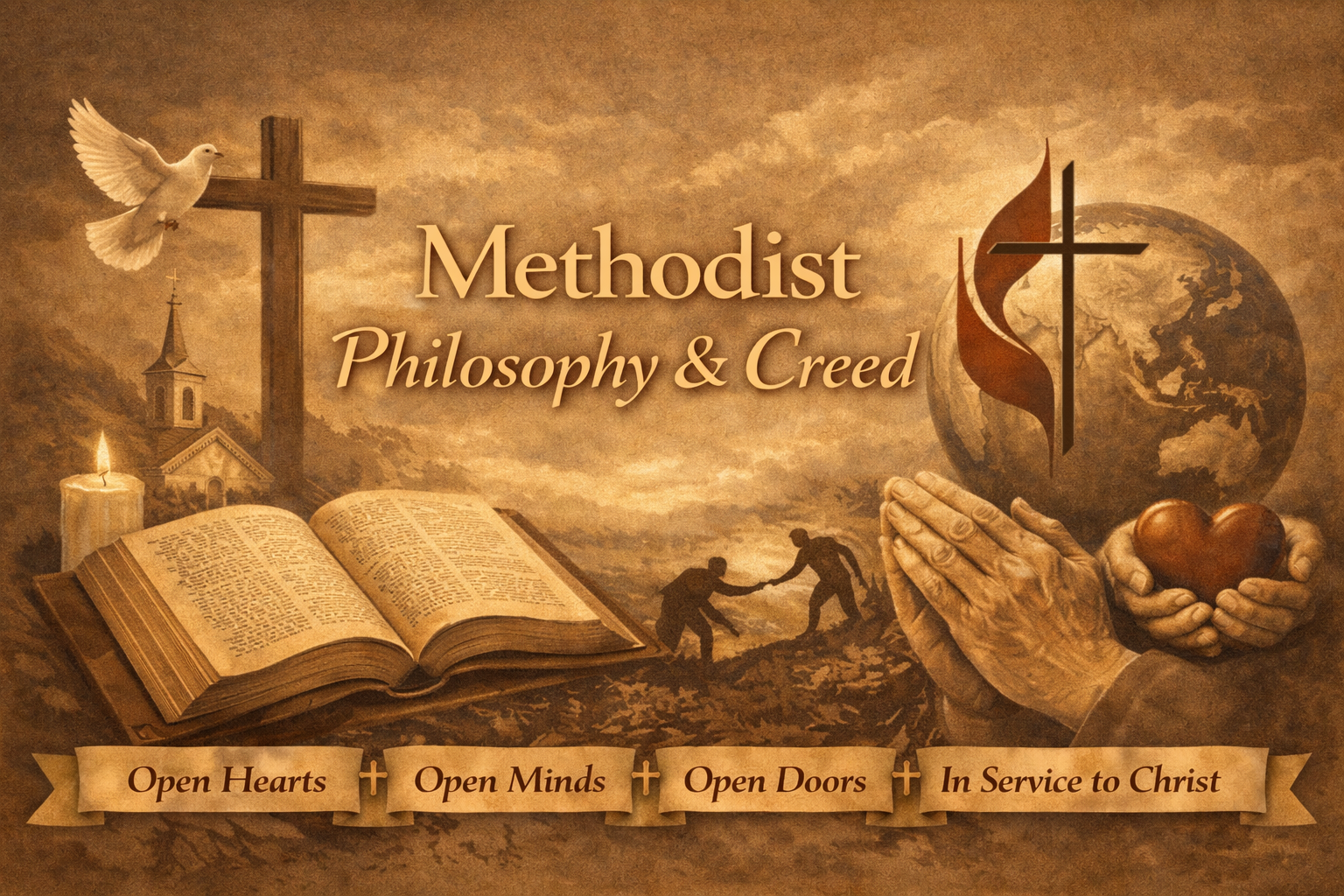
Methodist Philosophy
Methodism is a Protestant Christian tradition that originated in the 18th century as a revival movement within the Church of England, led by Rev. John Wesley.
The following are some key aspects of Methodist philosophy:
- Sanctification and Holiness: Methodist theology emphasizes sanctification, the process of becoming more like Christ and growing in grace. Rev. John Wesley described it as the “grand depositum” of the Methodist faith.
- Arminian Doctrine: Methodism follows the Arminian doctrine, which teaches that salvation is available to all and that individuals have free will to accept or reject God’s grace.
- Works of Piety and Mercy: Methodists believe in performing good works as an expression of faith, including acts of piety (like prayer and worship) and acts of mercy (like helping the poor and needy).
- Scripture and Tradition: Scripture is considered the primary authority, but Methodists also value Christian tradition, including the historic creeds.
- Worship and Sacraments: Worship is a time to gather in unity under Christ’s Lordship, celebrating His presence through praise, prayer, and the Word. The sacraments of Baptism and the Lord’s Supper deepen our relationship with God and one another. Through these sacred acts, we are reminded of Christ’s love and our commitment to live in His truth, love, and humility.
- Social Justice: Methodism has a strong emphasis on social justice and concern for the underprivileged.
Methodist Social Creed
We believe in God, Creator of the world; and in Jesus Christ, the Redeemer of creation. We believe in the Holy Spirit, through whom we acknowledge God’s gifts, and we repent of our sin in misusing these gifts to idolatrous ends.
We affirm the natural world as God’s handiwork and dedicate ourselves to its preservation, enhancement, and faithful use by humankind.
We joyfully receive for ourselves and others the blessings of community, sexuality, marriage, and the family.
We commit ourselves to the rights of men, women, children, youth, young adults, the aging, and people with disabilities; to improvement of the quality of life; and to the rights and dignity of all persons.
We believe in the right and duty of persons to work for the glory of God and the good of themselves and others and in the protection of their welfare in so doing; in the rights to property as a trust from God, collective bargaining, and responsible consumption; and in the elimination of economic and social distress.
We dedicate ourselves to peace throughout the world, to the rule of justice and law among nations, and to individual freedom for all people of the world.
We believe in the present and final triumph of God’s Word in human affairs and gladly accept our commission to manifest the life of the gospel in the world. Amen.